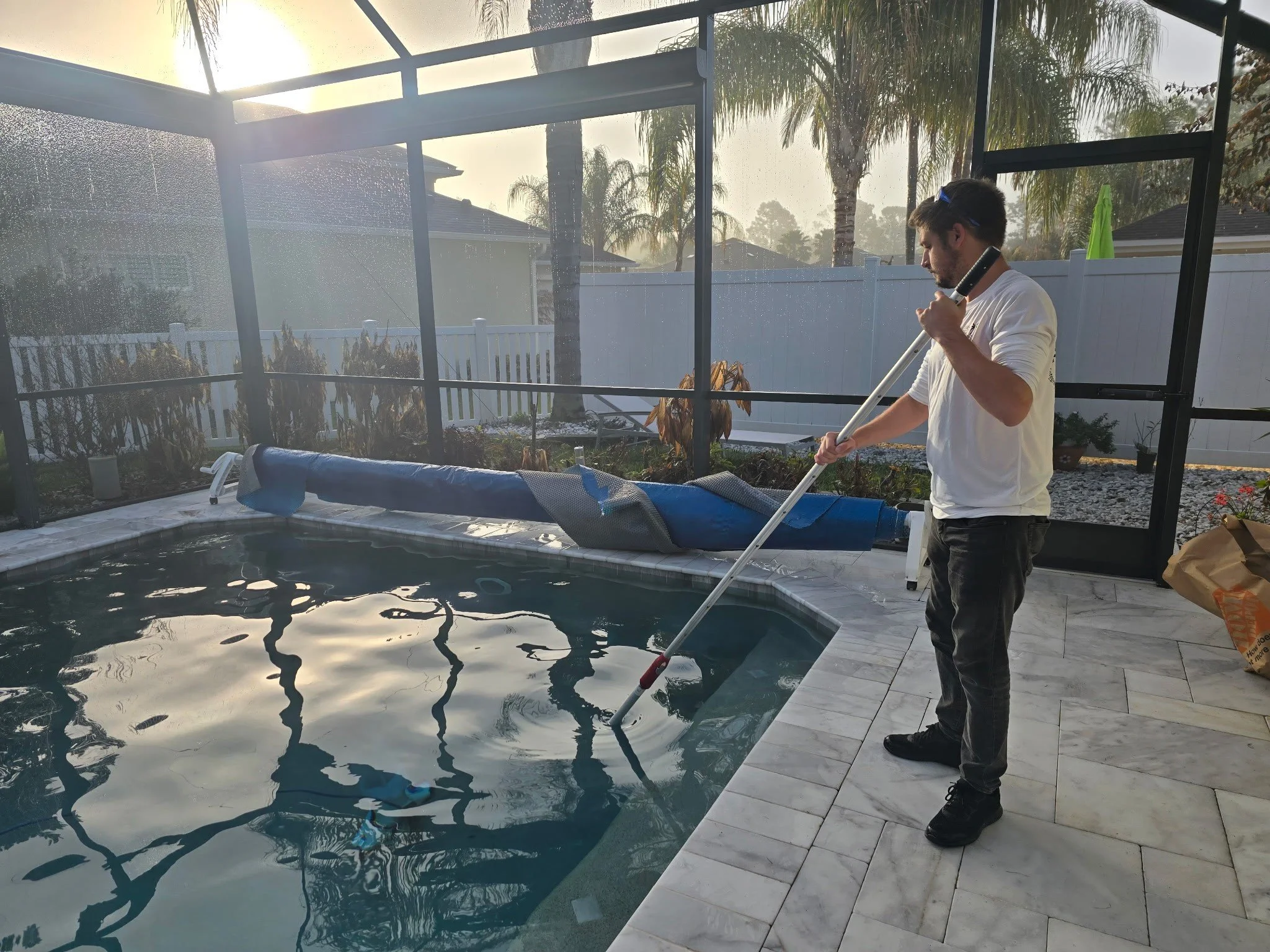
Your Florida pool in "winter": yes, you still need to take care of it (sorry
Look, we know what you're thinking. It's been 62 degrees outside, you've got a hoodie on way more than you’d like to admit, and the pool feels like somebody else's problem for a while. We get it. We really do. But here's the thing about Florida winters and your pool: the water doesn't take a vacation just because you did.
To try and help our neighbors, we're just going to give you some honest tips to keep your pool happy through the cooler months so you're not staring at a green swamp come April when the weather flips back to perfect.
Tip 1: Don't cut your pump run time too short
One of the most common things we see in winter is homeowners dialing back their pump run time because, hey, nobody's swimming. Makes sense on the surface. But circulation is what keeps your chemistry balanced and algae from throwing a party in your pool.
In the cooler months you can absolutely reduce your run time compared to peak summer. But we'd recommend staying at a minimum of 4 to 6 hours per day. Florida winters are sneaky. You'll get a warm stretch in January that heats the water right back up, and if your circulation has been sitting idle, algae will find that window real fast.
QUICK TIP:
If your pump is on a timer, just bump it down gradually rather than cutting it in half all at once. Your pool will thank you. And honestly, so will we when we're not having to explain a green pool situation to you in February.
Tip 2: Keep testing your water, even when it looks fine
Clear water is not the same as balanced water. We say this with love. A pool can look crystal blue and still have chemistry that's slowly chewing through your equipment or irritating your skin the moment you jump in.
In winter, evaporation slows down, swimmer load drops to basically zero, and it's easy to assume everything is fine. But pH drift, low alkalinity, and dropping chlorine levels don't care what season it is. Testing once a week is still the move. If you're on a weekly service plan with us, obviously we've got that covered. But if you're doing it yourself, a good home test kit or test strips are about five dollars at any pool supply store and take two minutes.
QUICK TIP:
The two numbers to watch most in winter are pH and chlorine. Keep pH between 7.4 and 7.6, and keep your free chlorine between 2 and 4 ppm. Those two things alone will carry you a long way.
Tip 3: Keep an eye on your water level after rain
Florida winters bring rain. Sometimes a lot of it. Rainwater dilutes your pool chemistry, raises your water level, and can throw everything off pretty quickly after a good storm. After any significant rainfall, it's worth a quick look at your water level and a chemistry test if you have the gear.
If your pool overflows during heavy rain, it can also wash in debris, yard runoff, and all kinds of stuff that your pool really did not ask for. Keep your skimmer basket clear after storms and let the system do its job.
QUICK TIP:
If you get more than an inch or two of rain, do a quick shock treatment to help the chlorine recover. It's a small step that saves a lot of headaches later.
The honest truth about Florida pool "winterizing"
Here in Florida, we don't close pools the way they do up north. There's no draining, no blowing out lines, none of that. Our winters just aren't cold enough to need it. What we do instead is light maintenance, consistent chemistry, and staying ahead of problems before they become expensive ones.
The good news is that winter is actually one of the easier times of year to keep a pool healthy in Florida. Less sun intensity, less evaporation, less swimmer activity. If you stay on top of the basics, your pool will coast through winter in great shape and be ready the moment you want to use it again. Which, knowing Florida, could be next Tuesday.
If you'd rather just have someone handle it for you, that's exactly what we're here for. Pure Freedom Pool Service does weekly maintenance throughout the local area. No contracts, no runaround, just honest work from people who actually live here.